Upper Boundary
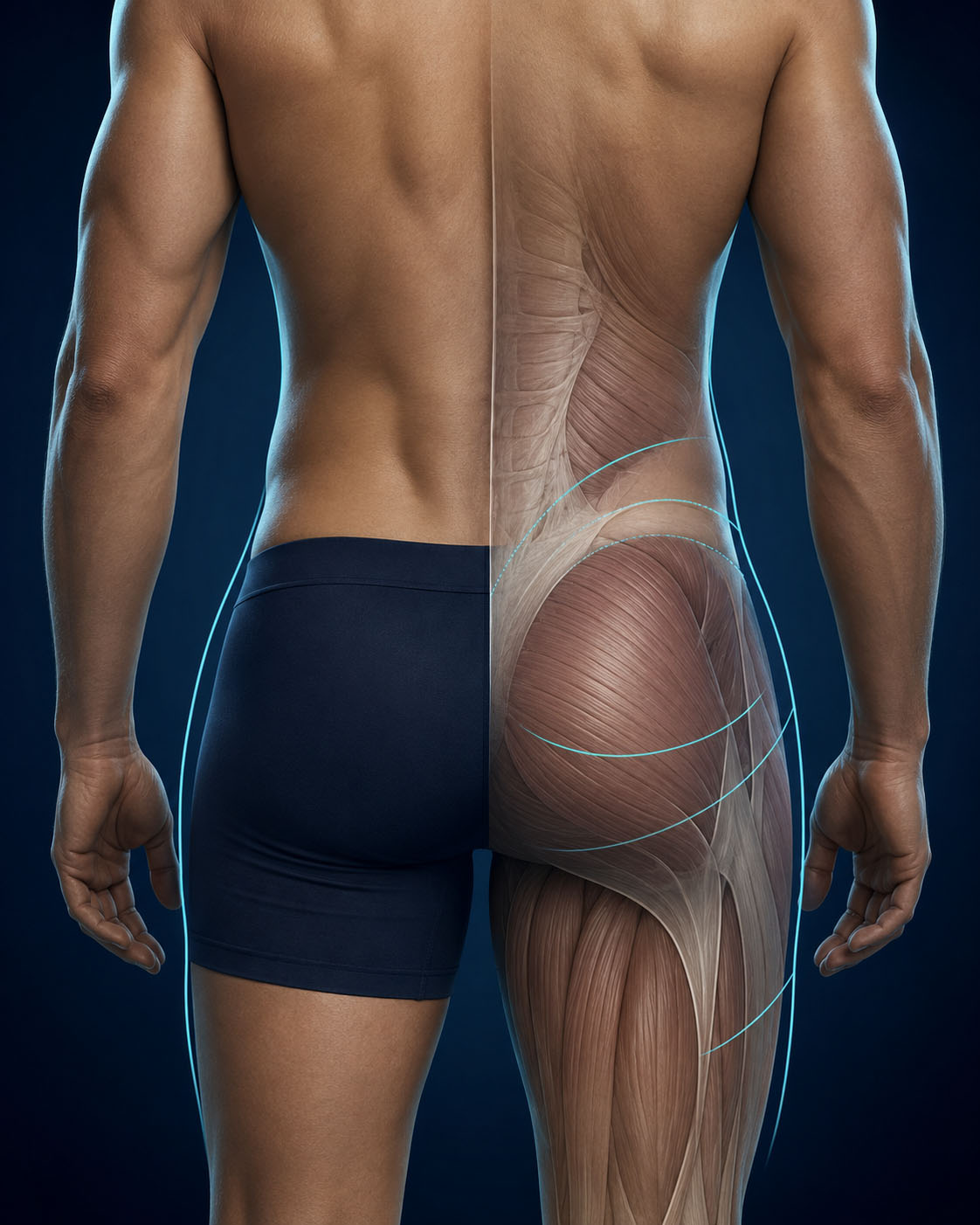
The transition from the lower back to the upper gluteal region influences the apparent height and definition of the buttocks.


Male Gluteoplasty
Male gluteoplasty is not the reproduction of a standardized masculine shape. It is a personalized approach to gluteal contour, projection, symmetry and muscular balance, guided by anatomy, function and the individual objectives of each patient.
Understanding the procedure
Male gluteoplasty is a personalized approach to improving the contour, projection and balance of the male gluteal region.
Rather than reproducing a predetermined shape, treatment begins with an evaluation of the patient’s anatomy, muscular structure, tissue quality and individual objectives. The aim is to create a result that remains proportionate to the waist, pelvis, lower back and thighs.
Anatomical proportions and muscular structure
Projection, contour and gluteal symmetry
Individual goals and functional balance

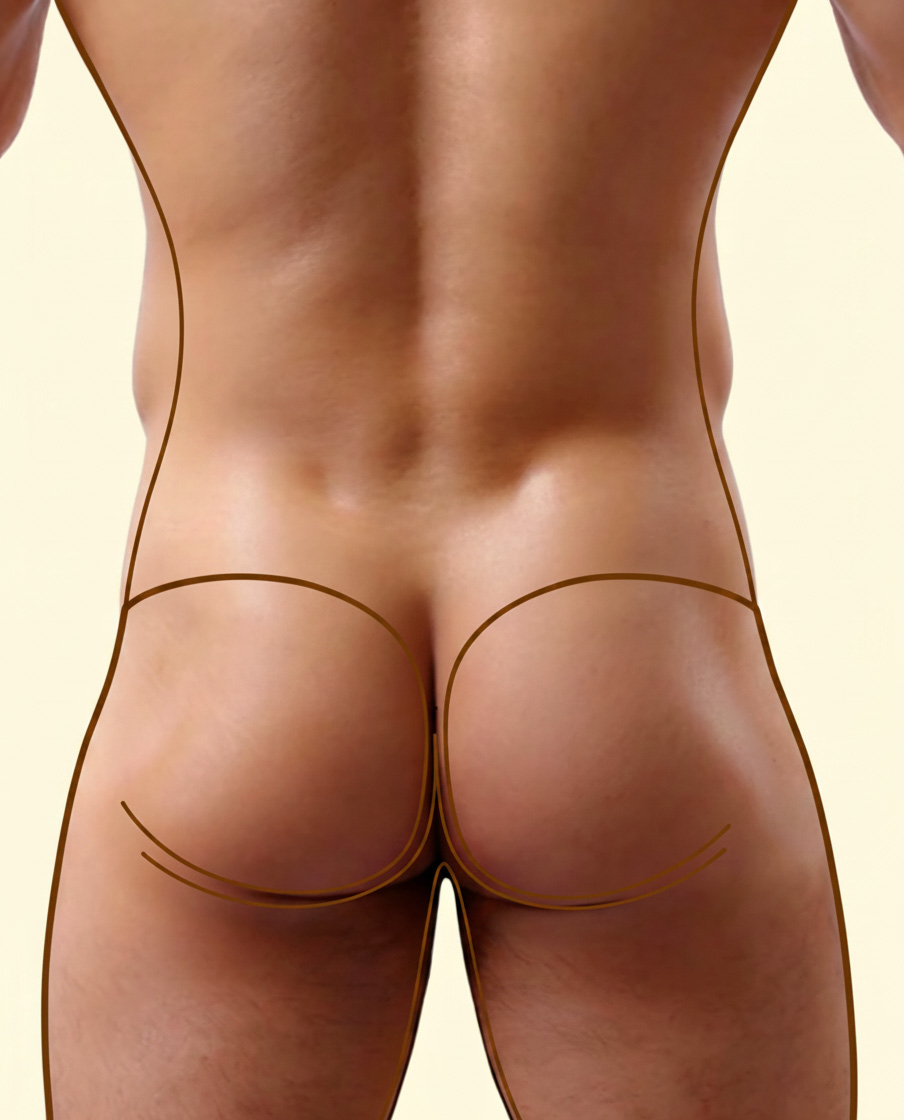 Upper boundary
Lateral contour
Infragluteal fold
Upper boundary
Lateral contour
Infragluteal fold
Form follows anatomy
The male gluteal region is shaped by the relationship between the pelvis, muscular volume, fat distribution and the surrounding contours of the lower back and thighs.
Understanding these anatomical relationships is essential when planning
male gluteoplasty.
Projection should not be confused with volume augmentation. Adding mass can distort masculine proportions and increase the downward load on the buttocks.
The objective is to improve projection without making the gluteal region heavier or more prone to descent. This is the principle of isovolumetric myomodulation..
The transition from the lower back to the upper gluteal region influences the apparent height and definition of the buttocks.
Pelvic width, muscular development and surrounding tissues shape the lateral relationship between the waist, hips and thighs.
The natural fold beneath each buttock defines the lower boundary and must be evaluated independently on both sides.
These surface landmarks provide a general anatomical reference. Individual anatomy must always be assessed during a clinical examination.
Different anatomies. Different objectives.
Men may consider gluteoplasty for different anatomical and personal reasons. The objective is not indiscriminate enlargement, but a precise response to projection, support, proportion, symmetry and contour.
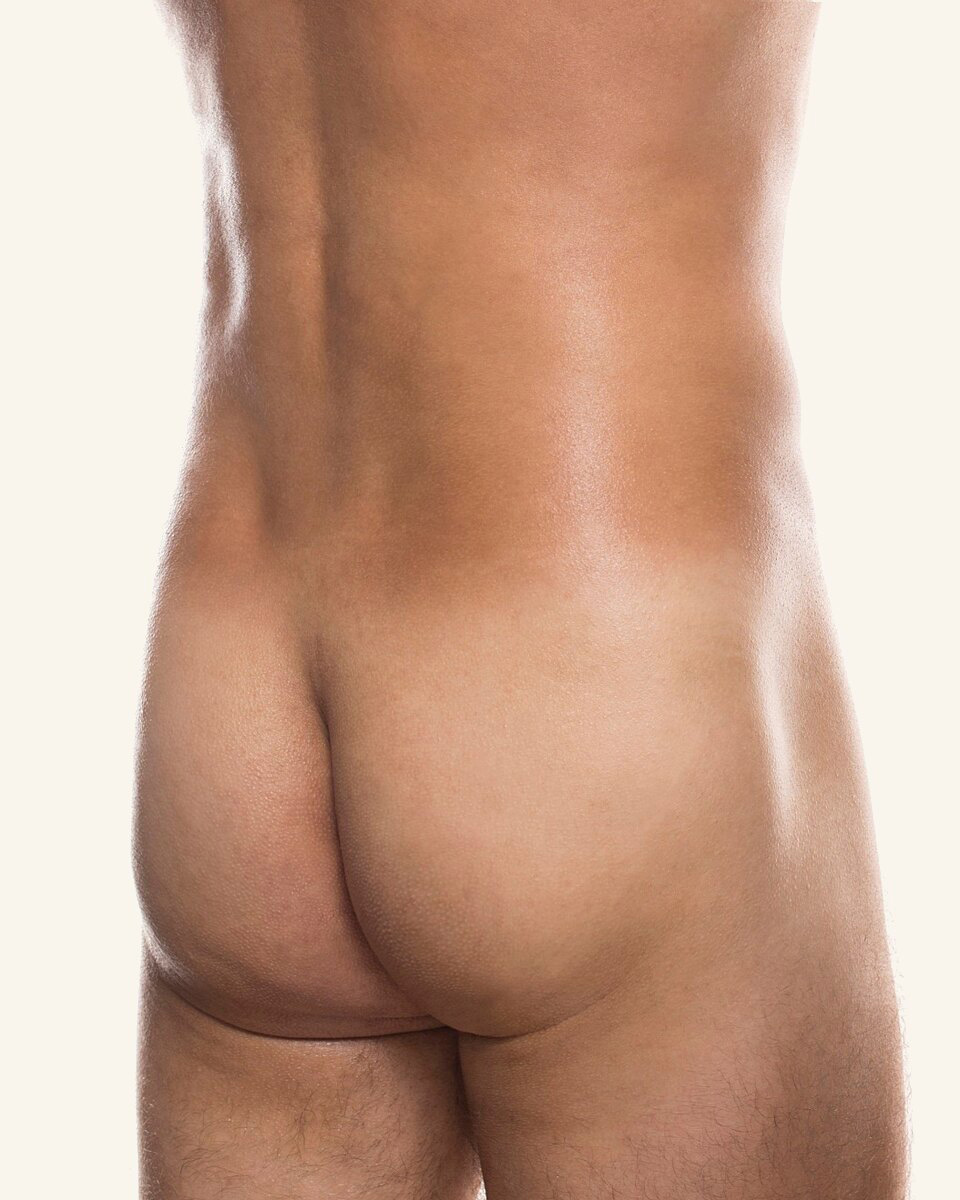
Projection
A flat posterior profile may reflect pelvic structure, muscular morphology or individual tissue distribution.
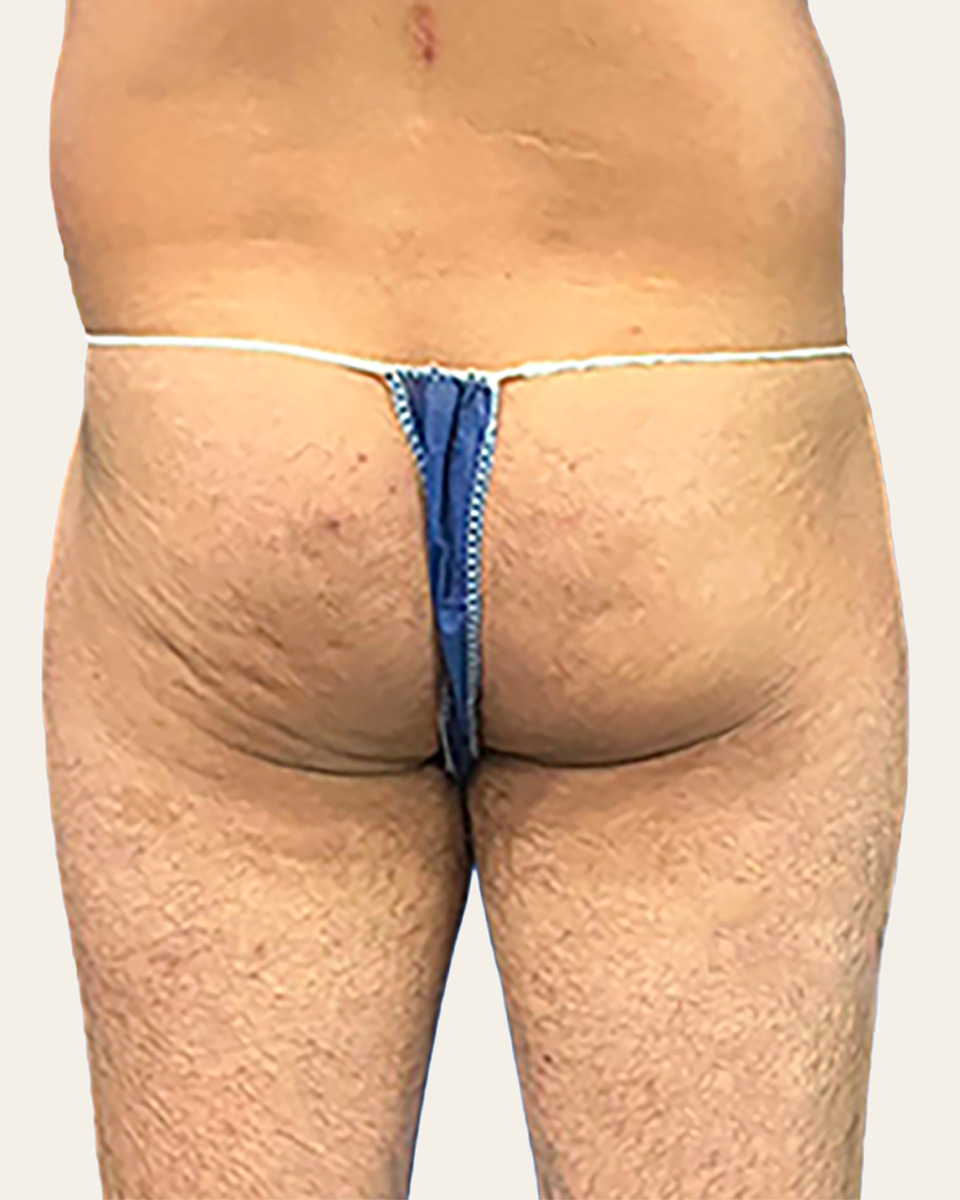
Support & tissue position
Tissue laxity or inferior displacement may reduce firmness and alter the transition between the lower back, buttocks and upper thighs.
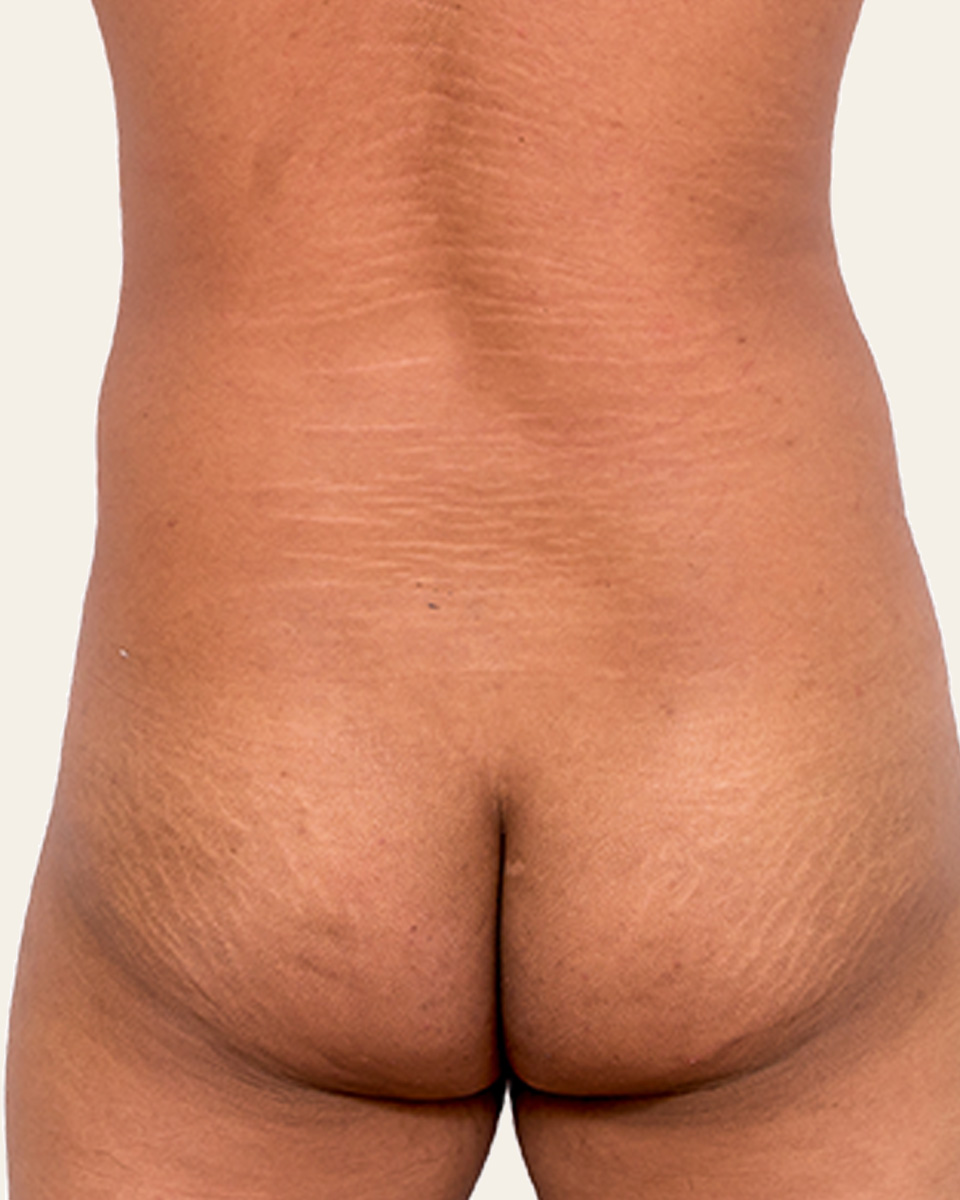
Body proportions
The relationship between torso width, waist structure and gluteal contour may create an imbalance in the posterior silhouette.
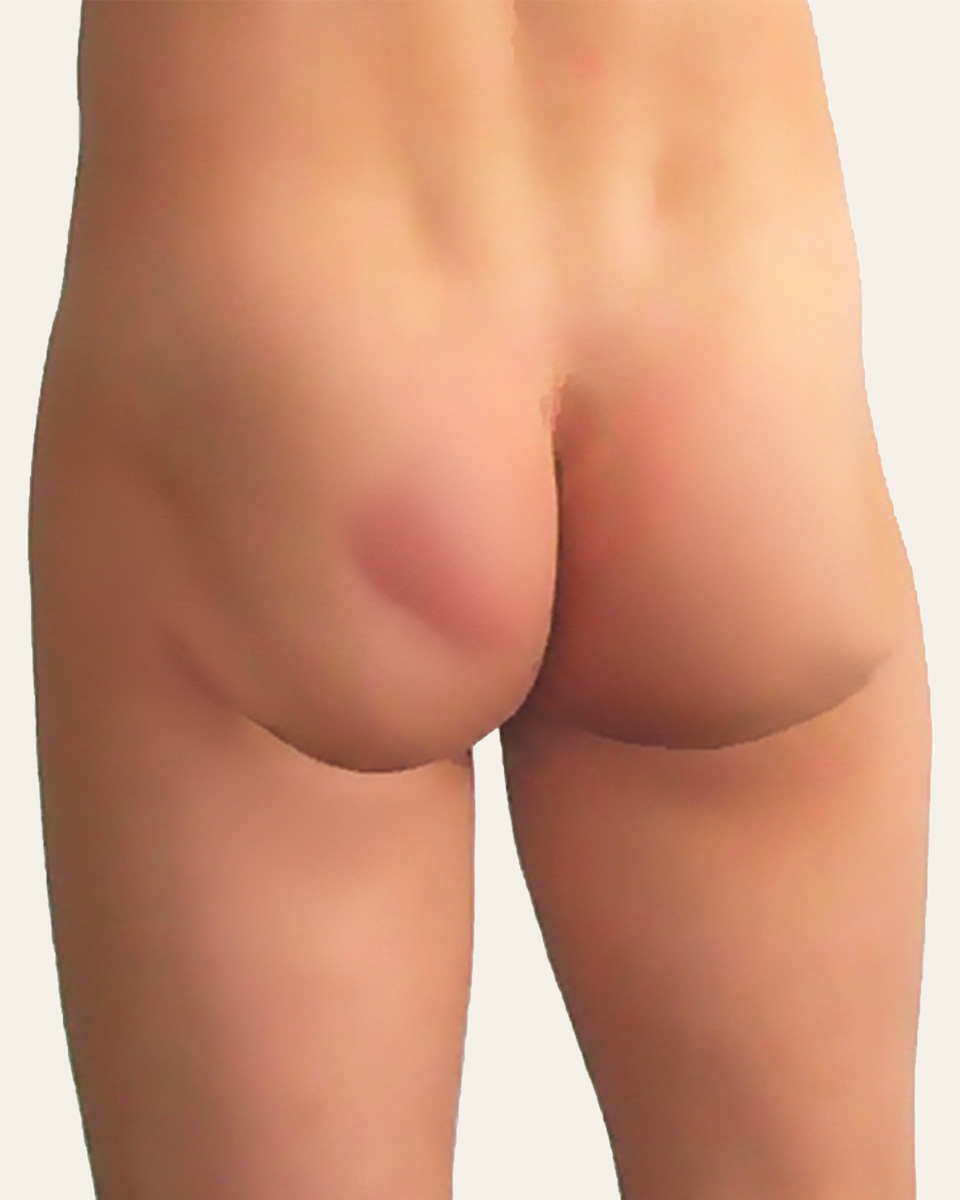
Balance & contour
Differences in volume, height or contour between the two sides may affect the overall balance and harmony of the gluteal region.
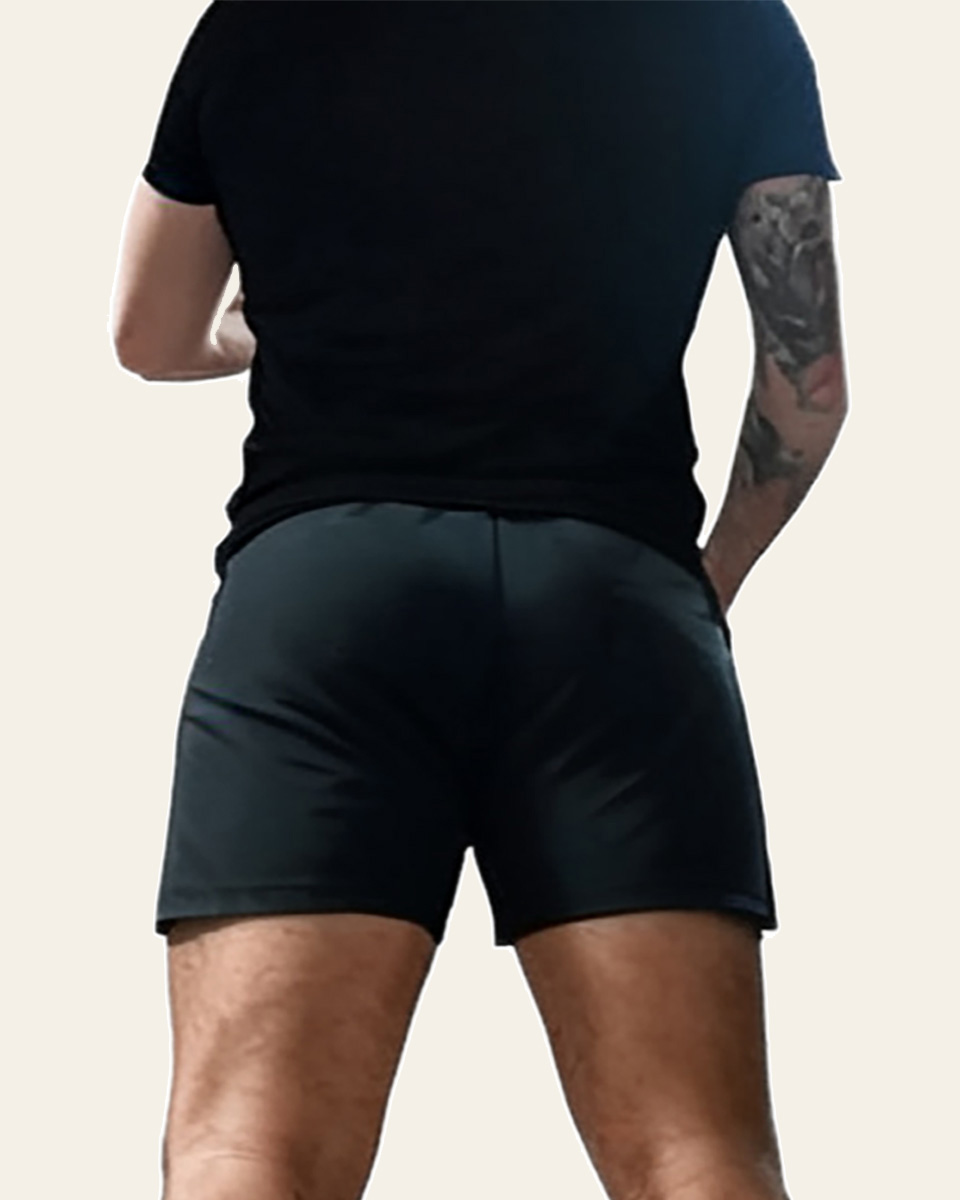
Anatomy & training
Even with consistent training, skeletal structure, muscle insertions and fat distribution may limit achievable gluteal projection and definition.
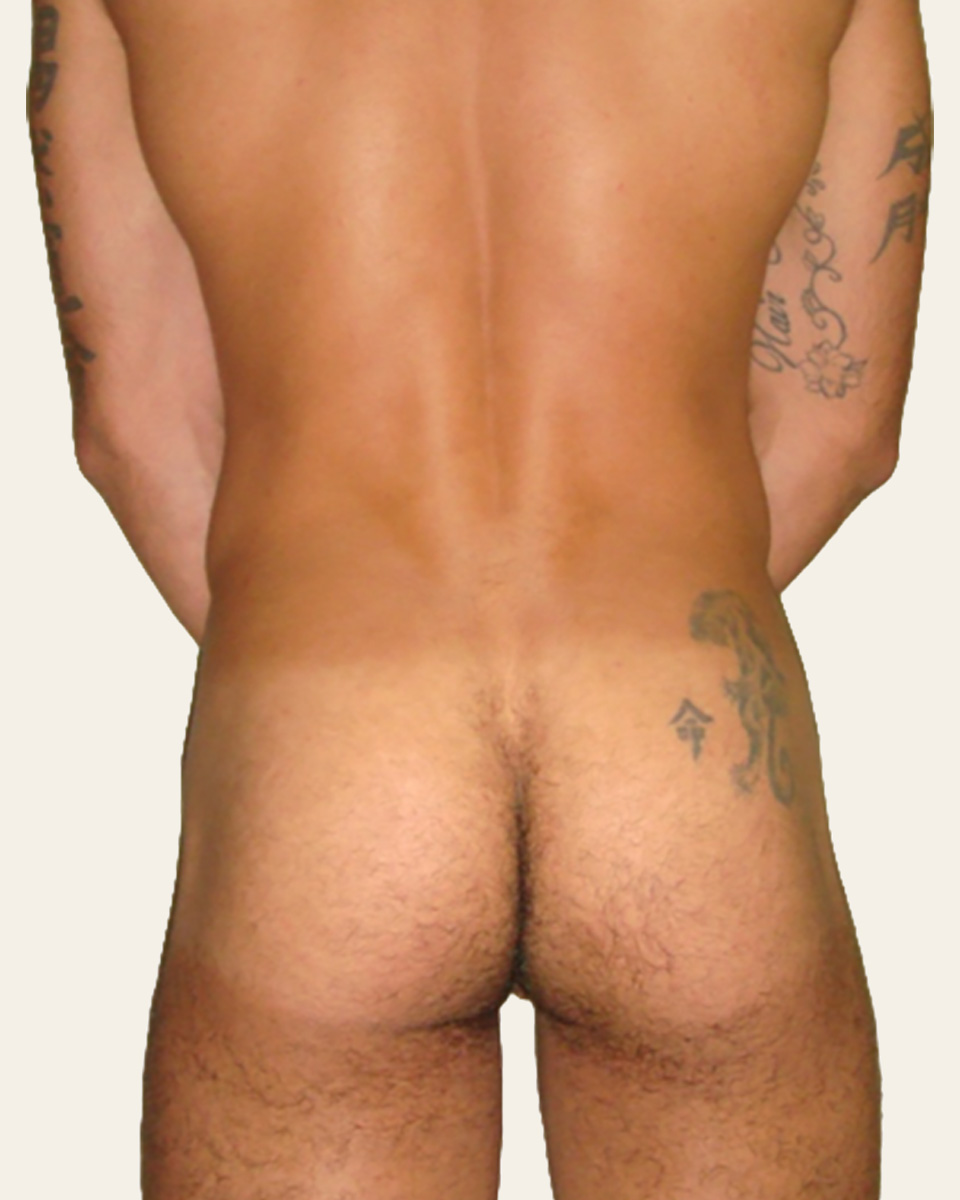
Definition & projection
A more defined gluteal contour and controlled posterior projection may improve the balance and athletic character of the male silhouette.
Clinical examples — individual anatomy and treatment objectives vary.
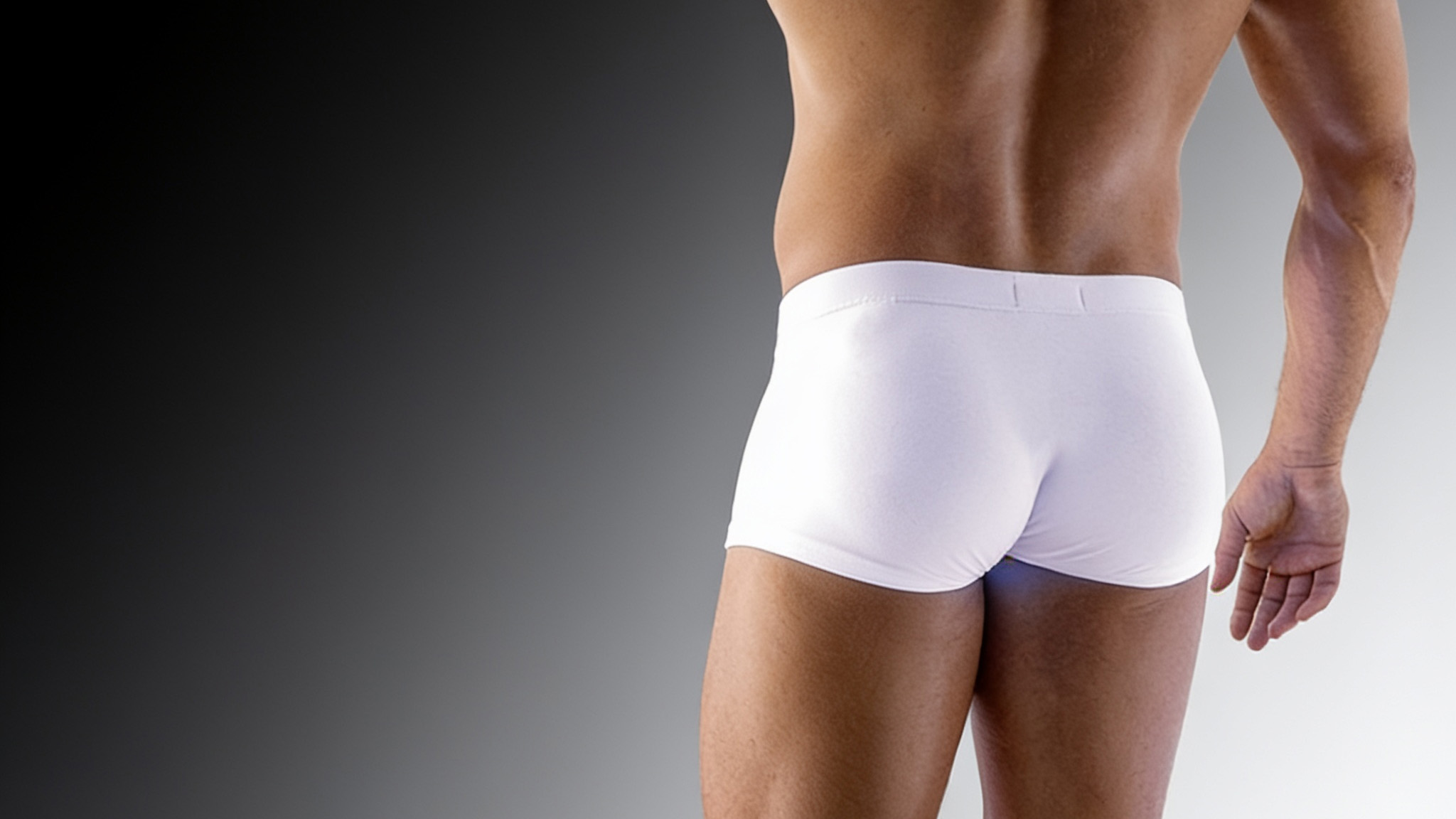
Male Gluteoplasty · Athletic Contour
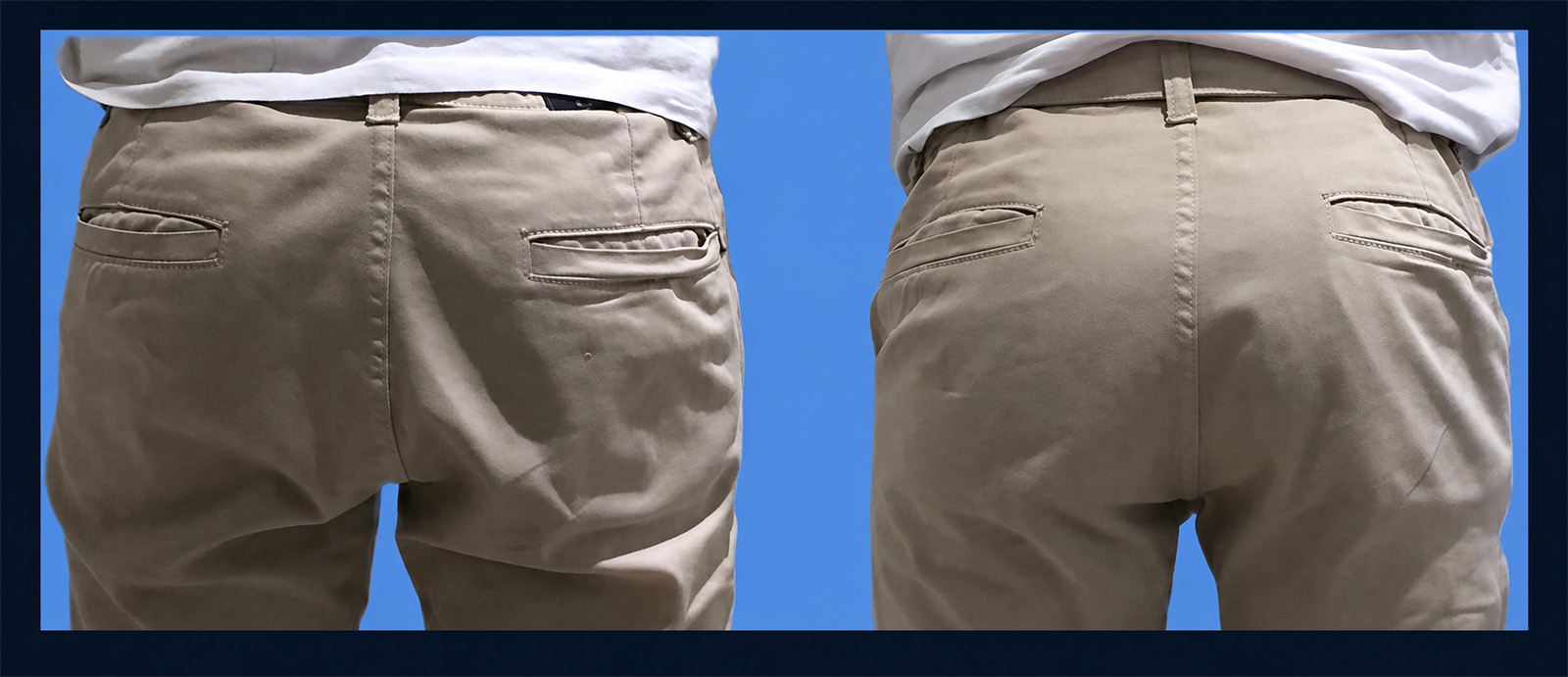
In athletic men, the objective is often not to add volume. Gluteal myomodulation reshapes an already developed muscular contour through a controlled lifting effect and a redistribution of the area of maximal projection.
Athletic gluteal hypertrophy may create substantial muscle mass while leaving the contour too vertically long, insufficiently compact, or poorly balanced in relation to the lumbar area and thighs. In these cases, adding volume would not necessarily improve the silhouette.
The treatment remains isovolumetric: no implant, filler or tissue addition is required. The intervention modifies the distribution of the existing muscular volume rather than increasing the total volume of the buttock.
Vertical length is reduced, width remains substantially unchanged, and the preserved volume is redistributed within a shorter contour. This can increase the local prominence of the area of maximal projection without creating an excessive result.
 Substantially preserved; the treatment primarily modifies vertical contour
through a controlled downward translation and redistribution of the focused
area of maximal projection.
Substantially preserved; the treatment primarily modifies vertical contour
through a controlled downward translation and redistribution of the focused
area of maximal projection.
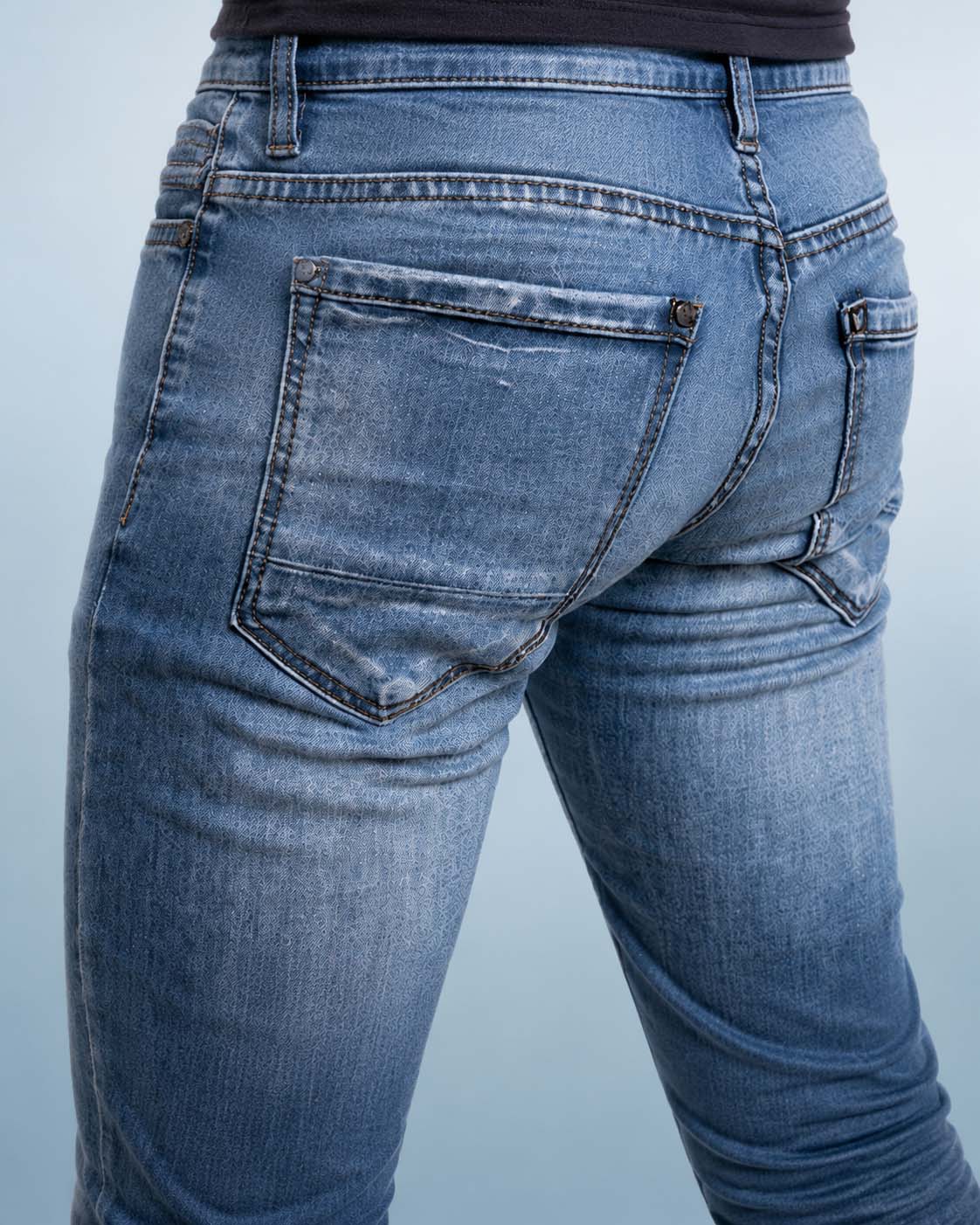
Aesthetic consequence
The essential change is neither a wider buttock nor indiscriminate additional projection. It is the controlled relocation of the area of maximal projection within the lower gluteal region, while maintaining a natural masculine architecture.
Contemporary low-rise styling can visually emphasize this lower position of gluteal projection. The desired result remains compact, muscular and proportionate to the athlete’s body—not elongated.
Explore Male GluteoplastyIndividual indications
Male gluteoplasty is not limited to one body type or one aesthetic goal. Planning is based on anatomy, muscular development, symmetry, tissue quality and the individual contour objective.
The athletic contour has its own isovolumetric logic, but other patients may seek a change in shape, restoration of balance, correction of a secondary contour alteration or a more individualized expression of their body.
Myomodulation does not impose a standardized buttock shape. Each treatment plan is adapted to the relationship between the lumbar area, buttocks, thighs and the patient's overall silhouette.
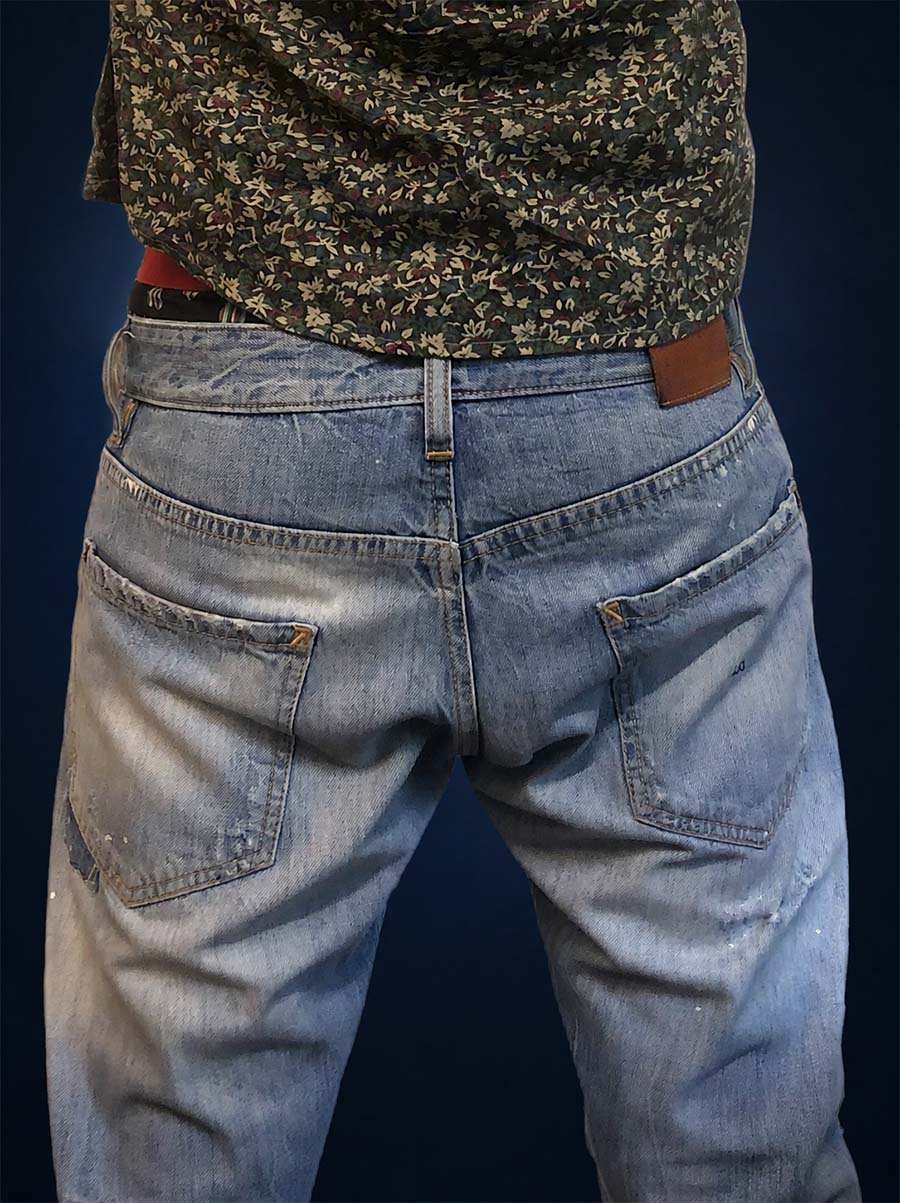
In men with developed gluteal musculature, the objective may be to create a more compact architecture through controlled lifting and a downward translation of the focused area of maximal projection.
Explore the athletic approach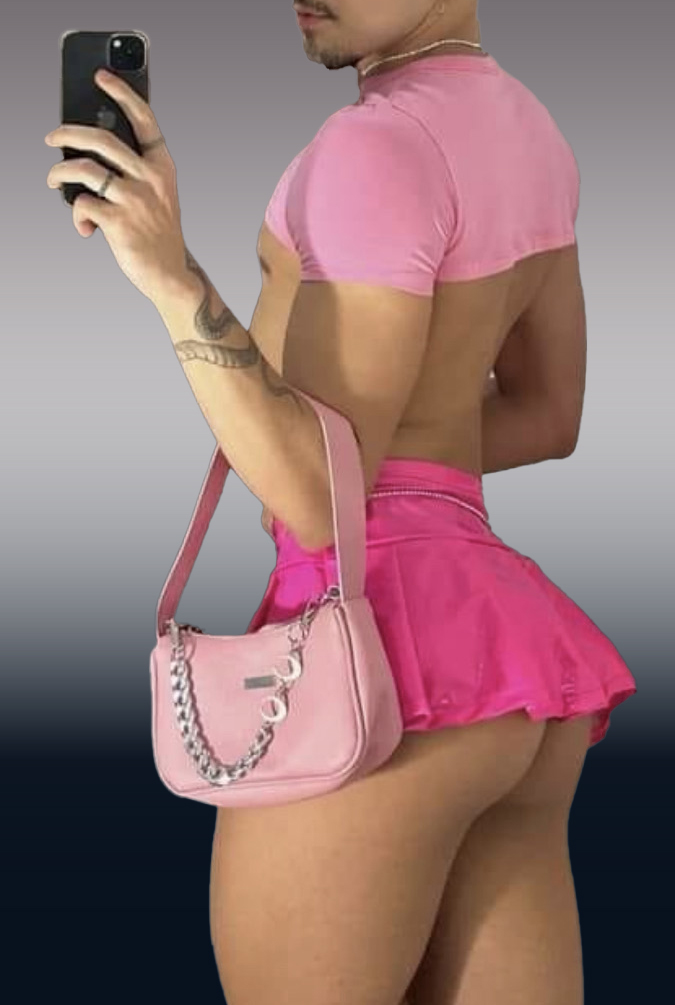
Some patients prefer a firmer, more angular and compact contour; others seek a softer, rounder or more projected silhouette. The intended result is discussed openly and planned within anatomical and proportionate limits.
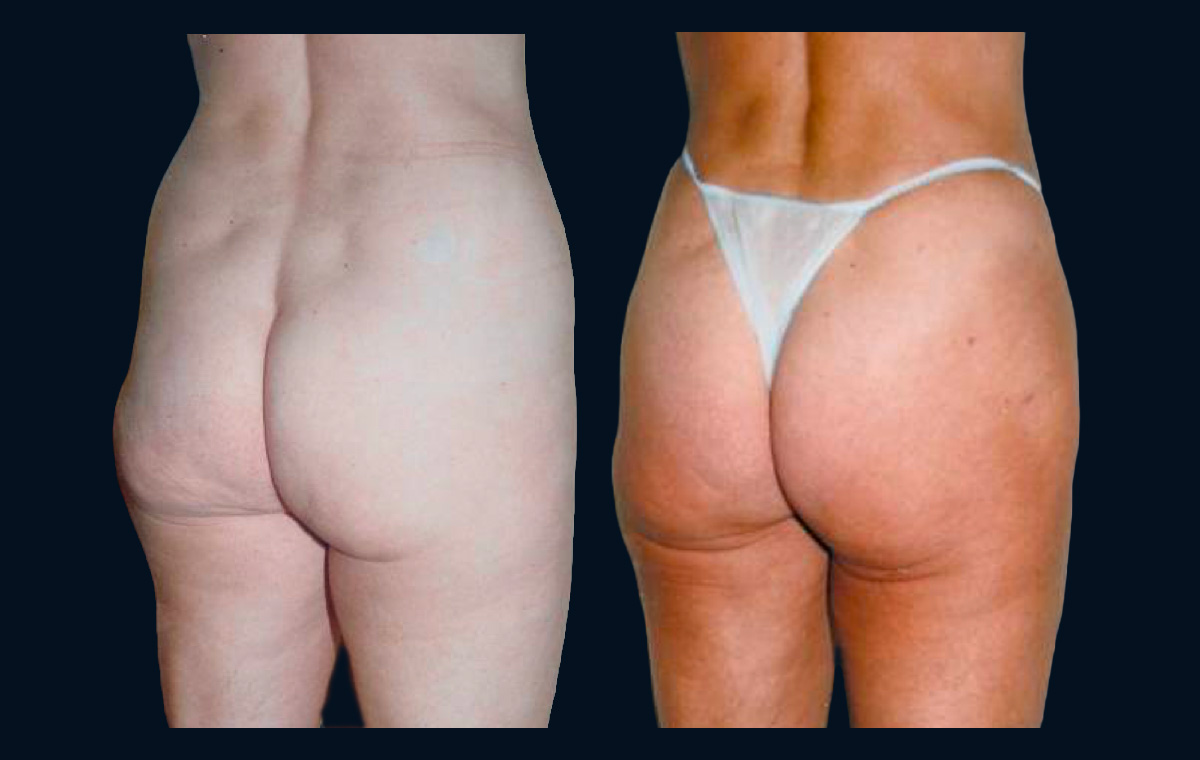
Treatment may be considered when asymmetry, localized muscular atrophy, aging, weight variation or a previous procedure has altered the balance between the two sides or reduced definition of the gluteal-thigh transition.
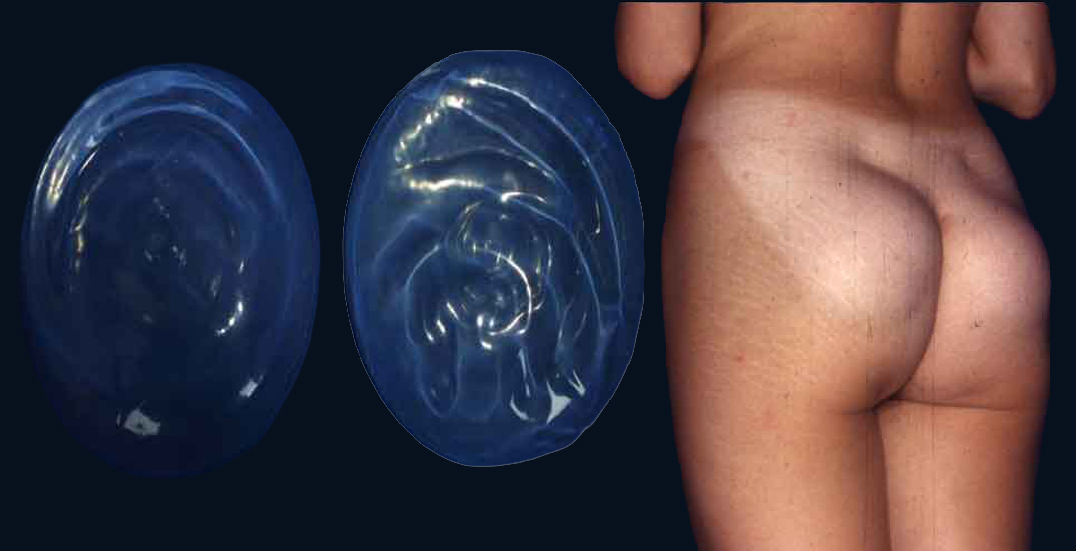
Post-traumatic changes, sequelae of previous surgery or implants, and selected functional situations require a particularly careful medical assessment. Treatment is considered only when the anatomy, tissue condition and overall clinical context are appropriate.
The objective is never a template. It is a coherent contour, individualized to the patient's anatomy, movement and personal aesthetic identity.
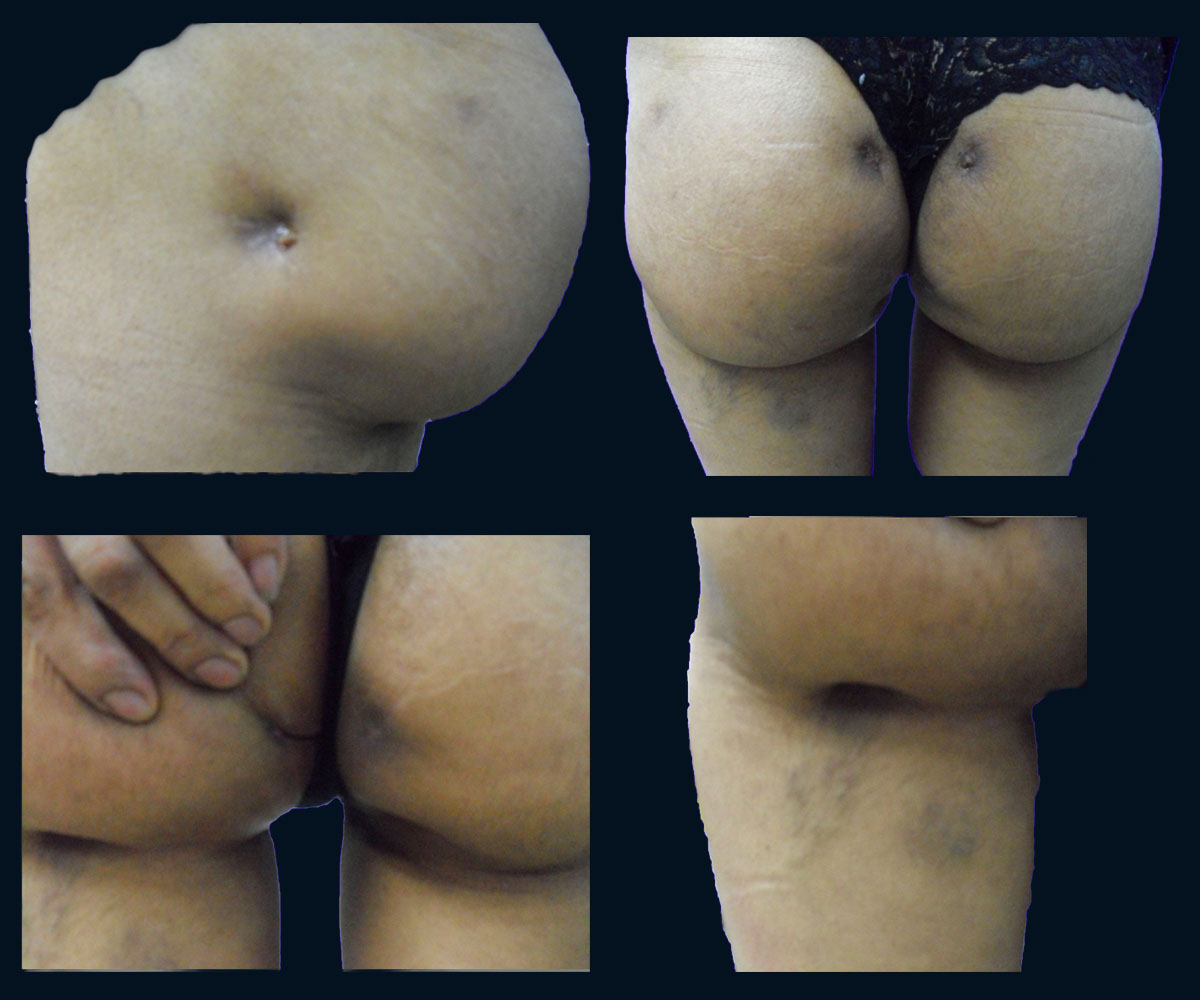
Gluteal Myomodulation
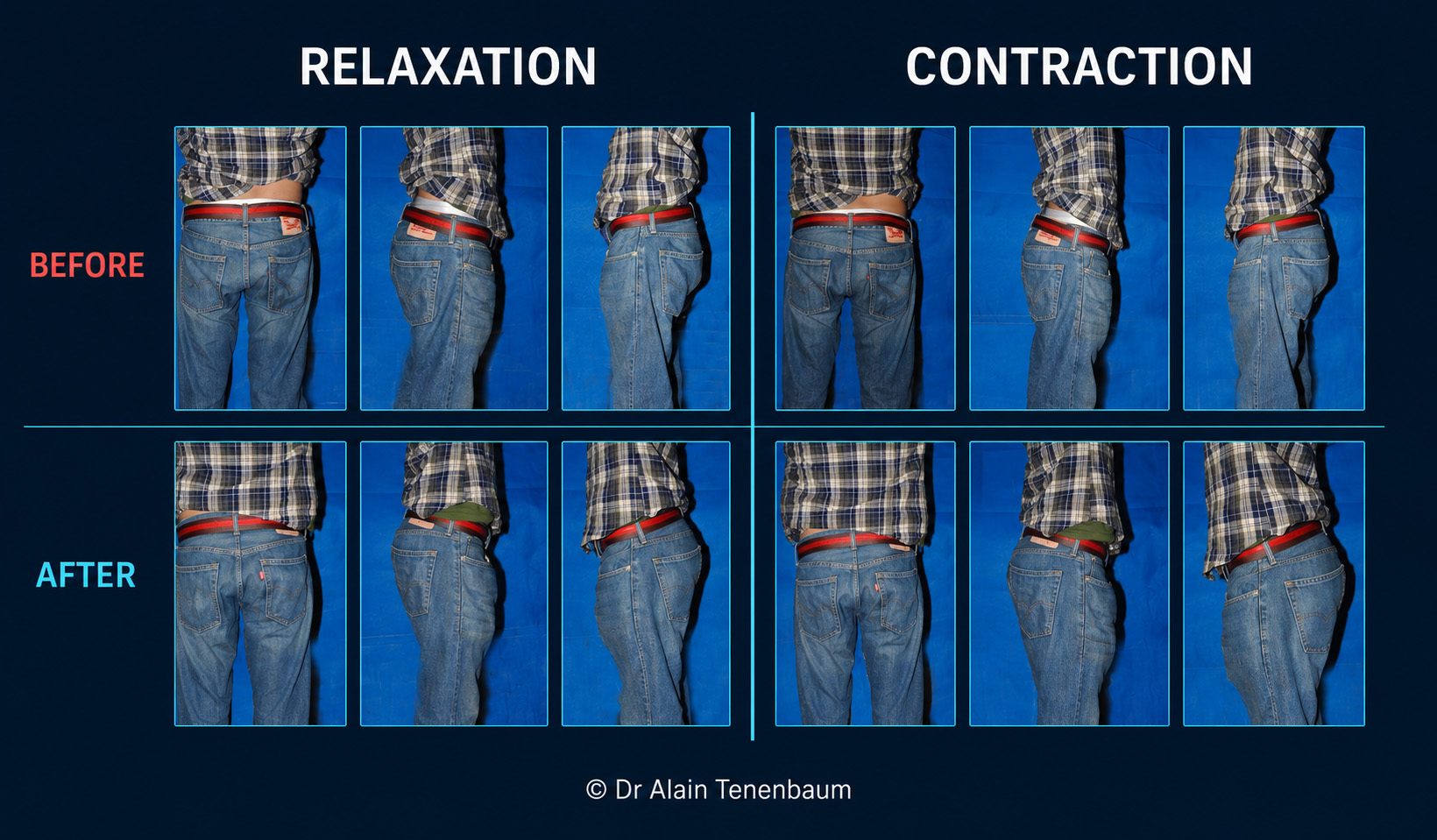
Male gluteal contour is not purely static. Muscular contraction can reveal or accentuate contour variations that are less apparent at rest. Assessment should therefore consider the buttocks in both relaxed and contracted conditions, together with their relationship to the waist, hips and upper thighs.
Dynamic assessment
A lateral gluteal concavity may become more visible when the gluteal muscles contract. In a masculine contour, this area contributes to the transition between the upper buttock and the lateral thigh.
Its presence alone does not establish an indication for treatment. Its location, depth, symmetry and behaviour during movement must be assessed individually before planning any intervention.
The objective is not automatically to erase every depression or to add volume. It is to evaluate whether a selected contour relationship is compatible with the patient’s anatomy and desired masculine silhouette.
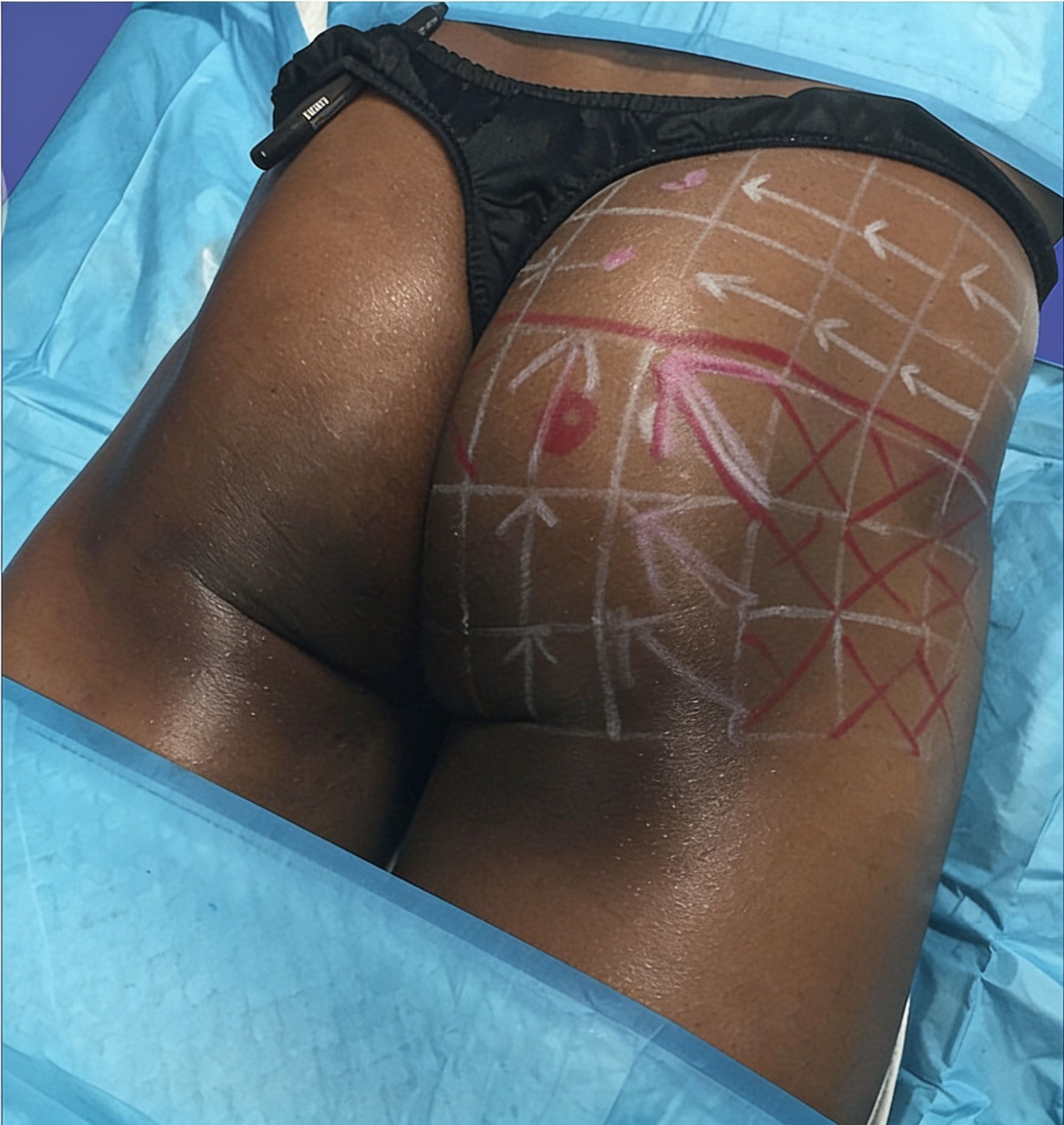
Treatment principle
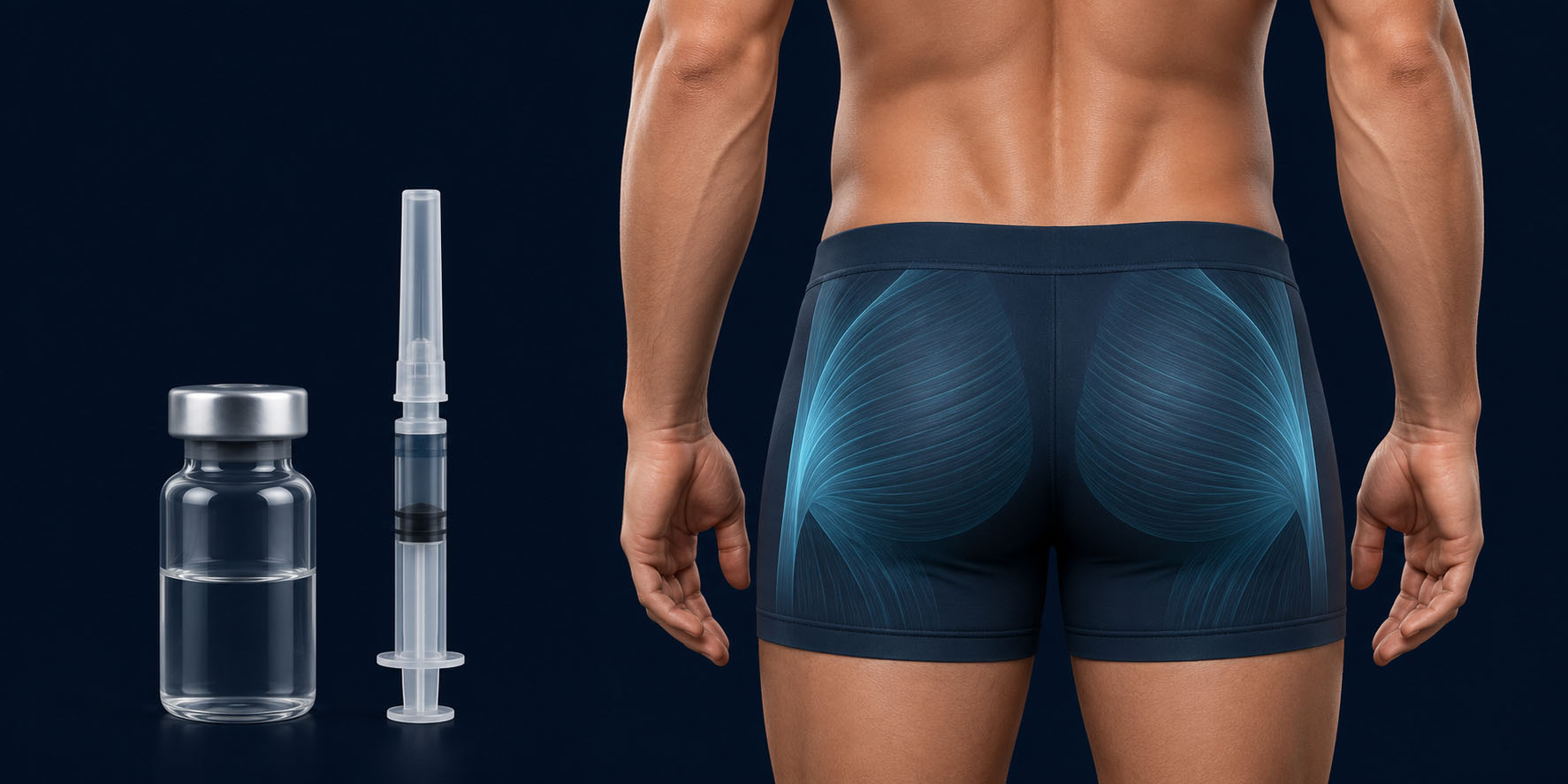
Gluteal myomodulation is intended to influence selected muscular and contour relationships rather than simply increase gluteal volume. Its planning should preserve a coherent transition between the lower back, buttock and thigh, while respecting the patient’s existing muscular development.
Early unilateral clinical observation
The following paired views document an immediate unilateral observation under relaxed and contracted conditions.
Early unilateral clinical observation
The following paired views document the same unilateral clinical observation under relaxed and contracted conditions. Each condition is shown from two complementary viewing angles.
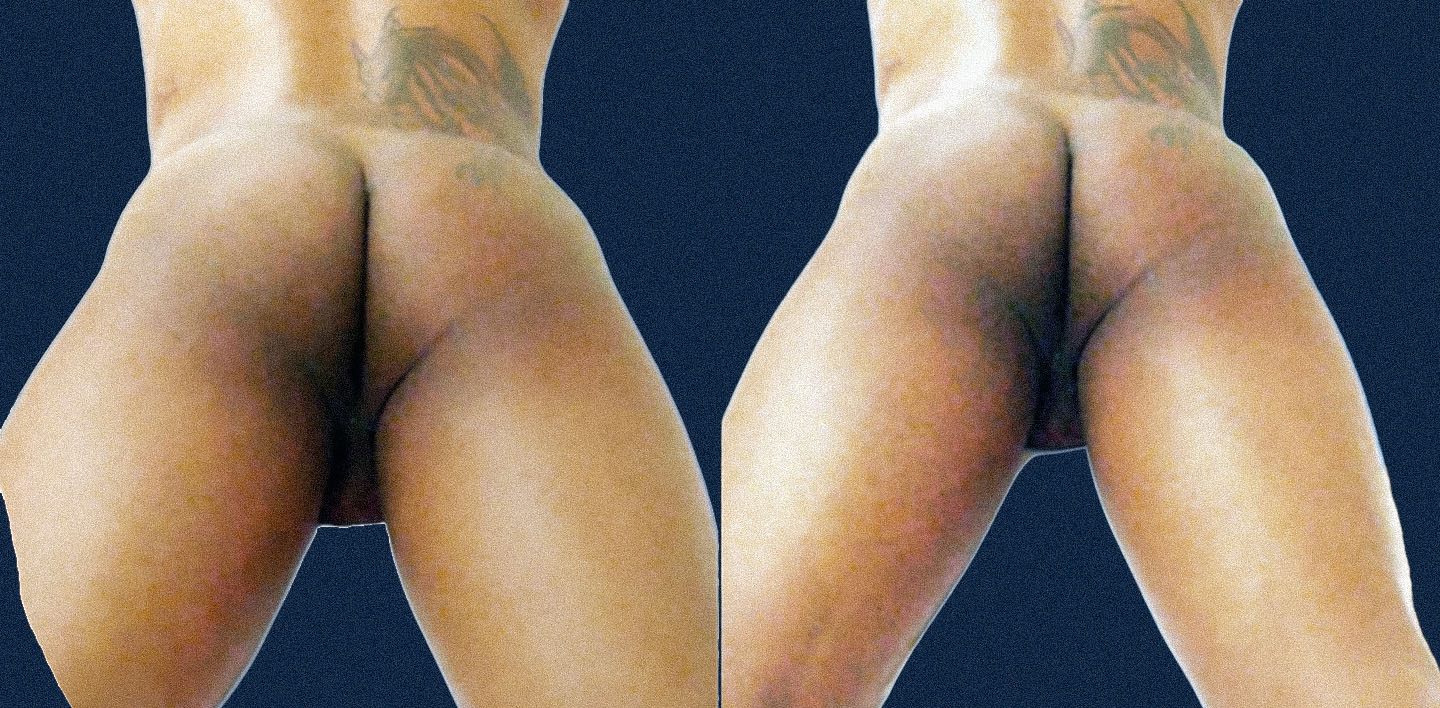
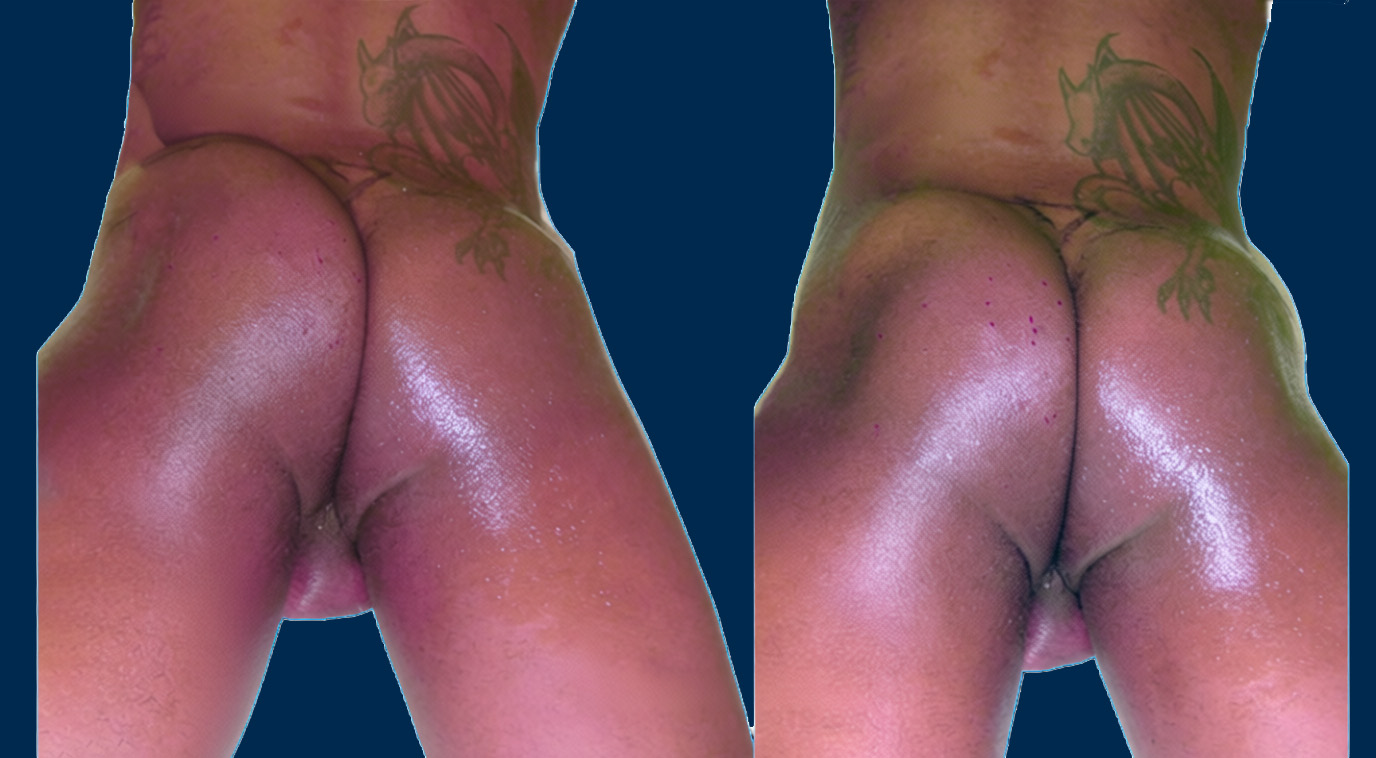
These individual early observations do not establish the durability or typical magnitude of a result. Images courtesy of Dr Alain Tenenbaum.
Clinical planning
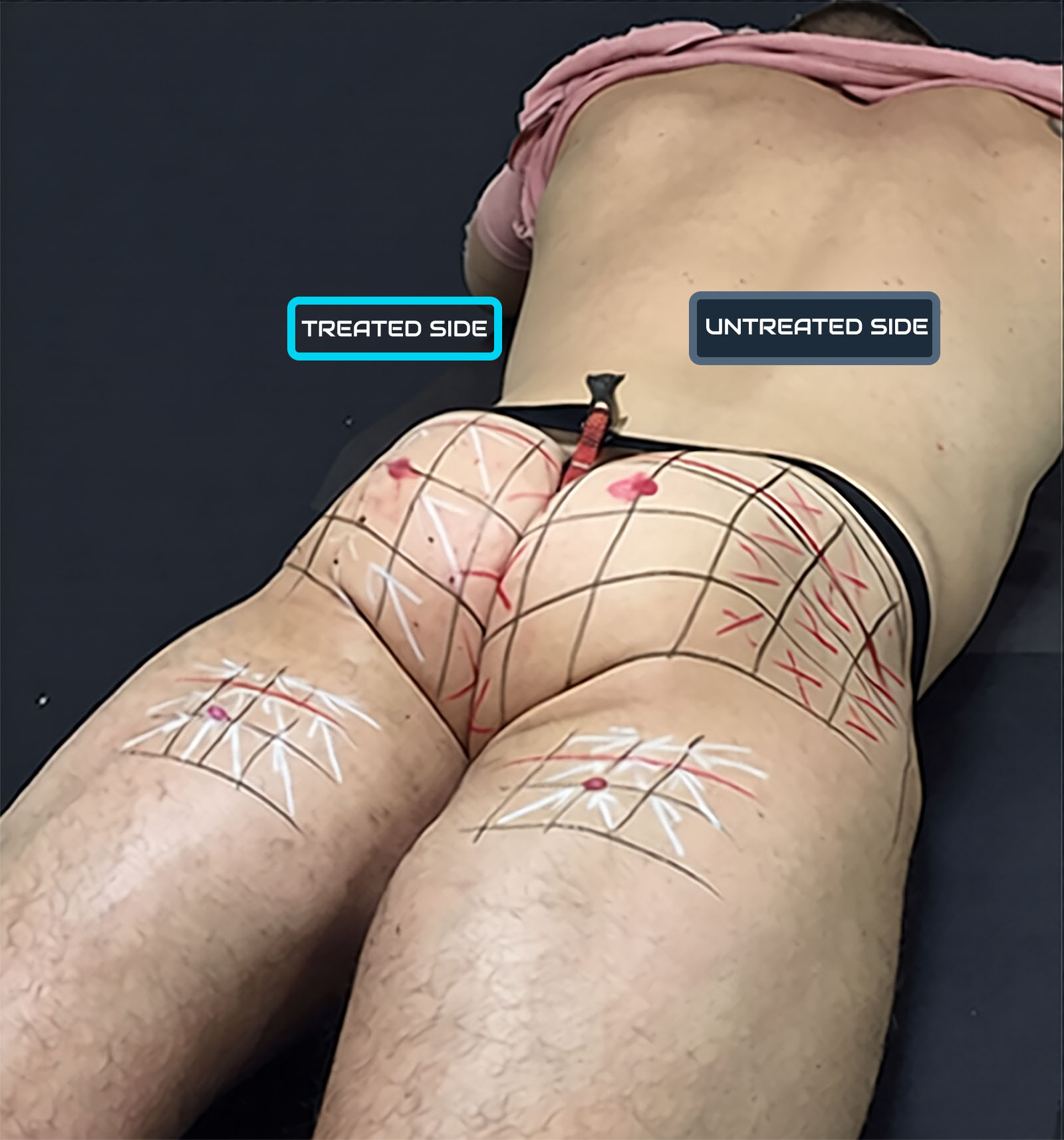
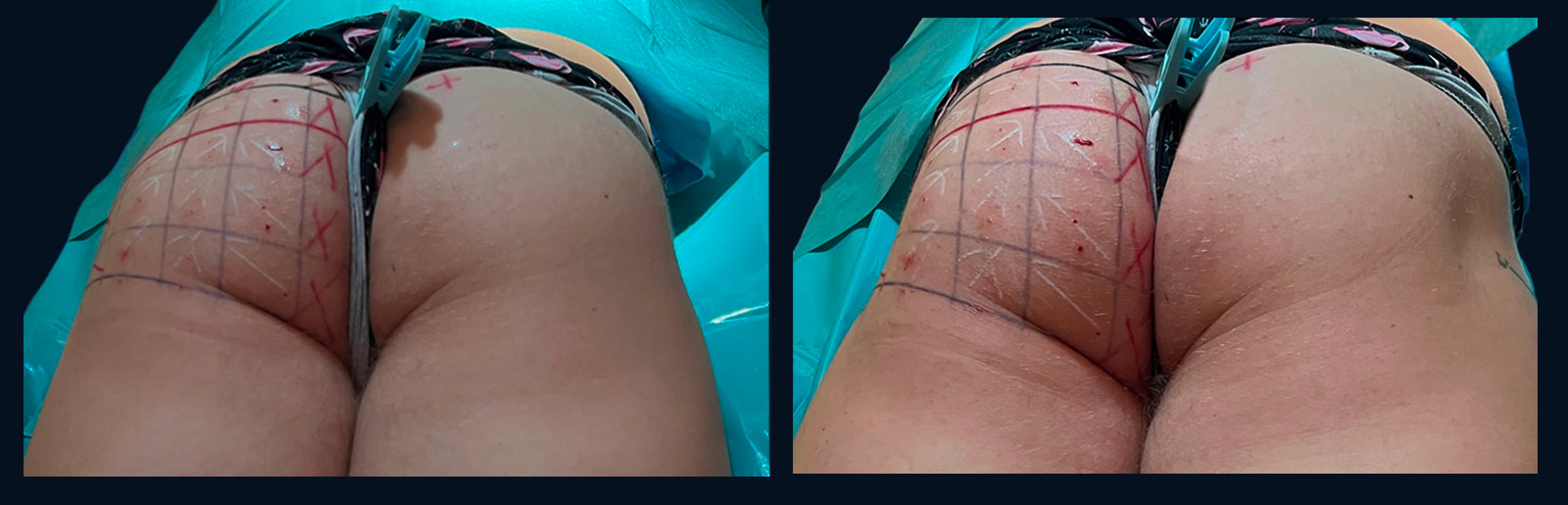
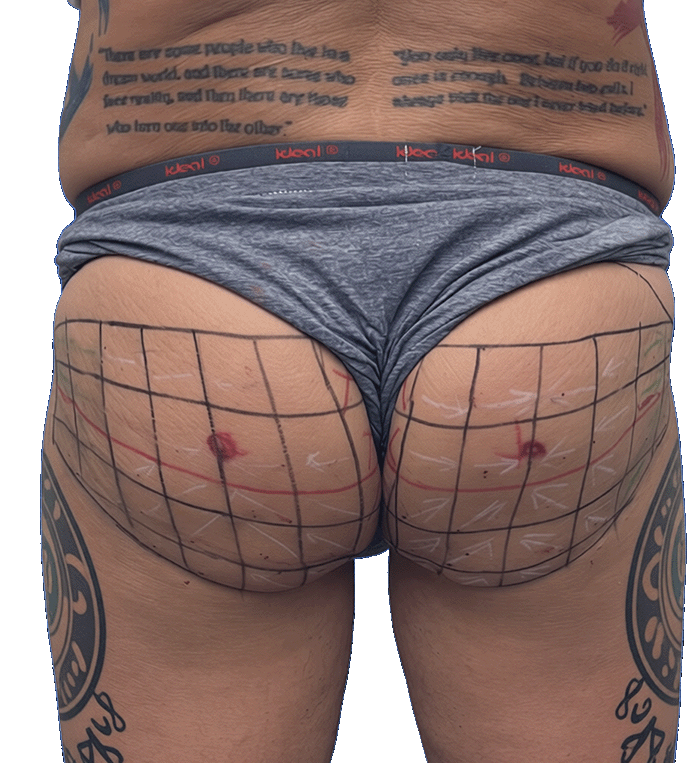
There is no universal marking pattern. Clinical assessment determines the treatment map for each patient according to the existing anatomy, muscular behaviour, previous procedures and the contour the patient wishes to preserve or modify.
The clinical principle
The position of maximum projection, the intergluteal region and the external gluteal concavity must be assessed together. Modifying one component may change the visual relationship between projection, width and the surrounding anatomical transitions.
The objective is not to reproduce a standardised shape. The treatment map is adapted to the patient’s baseline morphology, asymmetries, dynamic muscular response and stated contour preferences.
The marking is designed for the individual patient—not copied from a fixed template.
Contour preference
Assessment begins by identifying what the patient wishes to preserve, emphasise or soften. General labels alone are insufficient; the desired anatomical changes should be described precisely.
Clinical examination
Static appearance alone does not provide sufficient information. Examination at rest and during voluntary contraction helps identify asymmetries and the apparent contribution of muscular activity to the visible contour.
Individual mapping
The findings are translated into a side-specific treatment map. Existing procedures or anatomical constraints may substantially modify the marking, the proposed approach or the feasibility of treatment.
Interdependent planning points
The treatment map should reflect the relationship between projection, central definition and the external contour rather than treating each area as an isolated feature.
Its baseline position is documented before deciding whether the visual emphasis should be preserved, reinforced or rebalanced.
The patient’s preference for preserving or visually broadening this region is considered in relation to the surrounding contour.
The plan may seek to preserve or emphasise the concavity, or to soften it when the patient prefers a fuller lateral transition.
Treatment pathway
Gluteal reshaping is a progressive clinical process. Each session is followed by standardised assessment so that immediate changes, subsequent evolution and the need for further treatment can be evaluated separately.
Approximate session duration
No anaesthesia is routinely used
Immediate contour change may already be visible
First reasonable clinical assessment of the result
Before treatment
Clinical examination, patient-specific marking and standardised photography establish the reference against which subsequent changes will be assessed.
Treatment session
The treatment is performed on an outpatient basis according to the patient-specific map established during clinical assessment. A session generally lasts approximately 15 to 30 minutes.
Approximately 30 minutes
A visible modification of the contour may be observed immediately and documented approximately 30 minutes after treatment. These photographs provide an early comparison, but they should not be confused with the subsequent clinical assessment.
The 30-minute photographs document an immediate contour change. They do not represent the final long-term result.
After three days
The result can be evaluated more reasonably after approximately three days. Comparison with the baseline photographs helps assess projection, width, anatomical transitions and right-to-left balance.
Results remain patient-specific and depend on the initial anatomy, muscular behaviour, treatment map and individual clinical response.
Longitudinal follow-up
Follow-up is used to compare standardised photographs, examine the contour at rest and during contraction, and decide whether the treatment schedule should be maintained or adapted.
Clinical reviews may be scheduled at approximately 1, 3, 6 and 12 months. A follow-up visit does not necessarily correspond to an additional treatment session.
Static and dynamic assessment
Standardised posterior, oblique and lateral photographs help document changes in projection, lifting and contour from several complementary viewing angles.
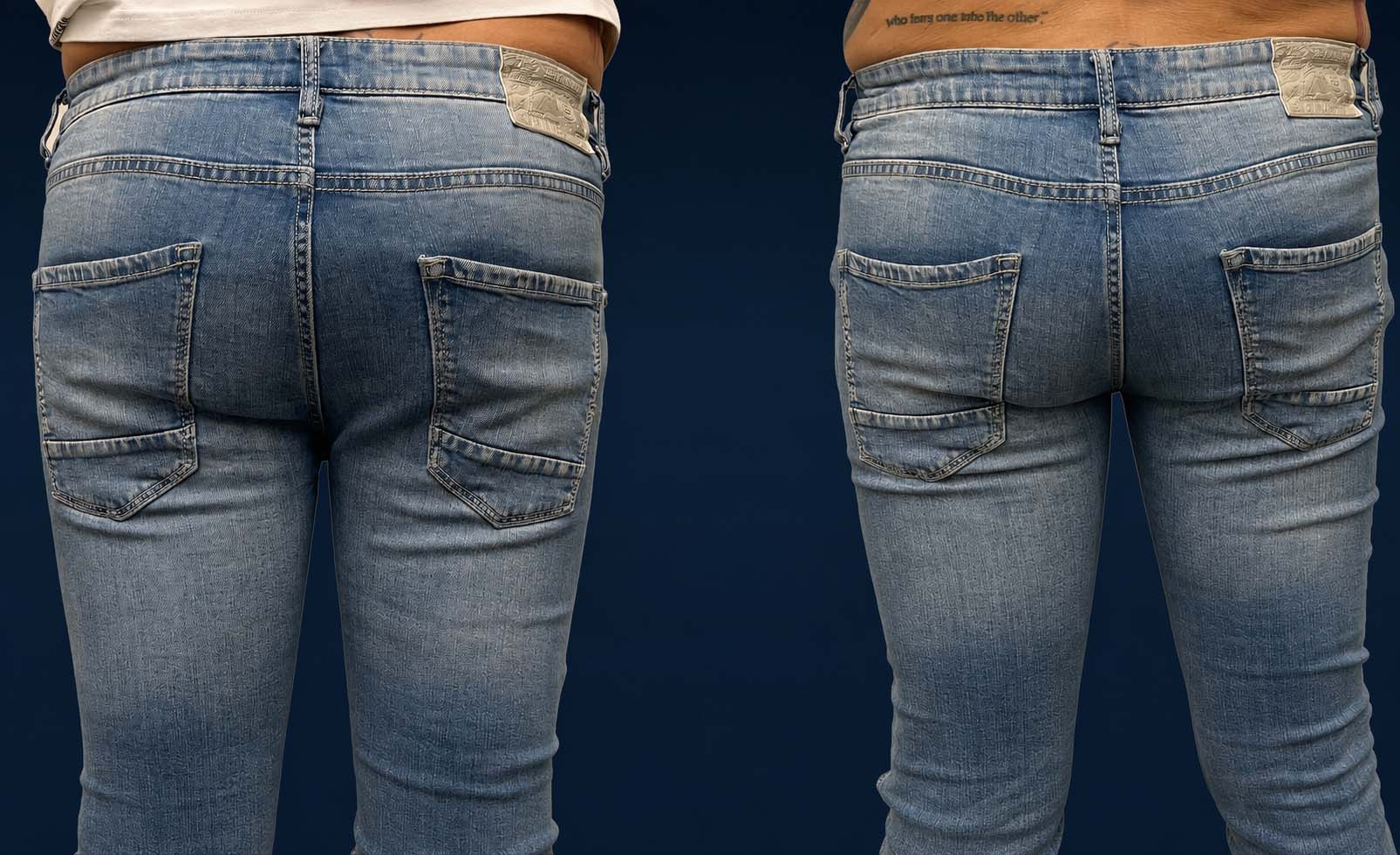
When muscular behaviour contributes to the visible contour, the same views are reproduced at rest and during voluntary contraction. Assessment with the patient wearing his preferred jeans may also show how the treatment changes the clothed silhouette.
Progressive treatment schedule
The initial treatment protocol is distributed over two years rather than being concentrated into a single period. The exact timing may be adapted according to the patient’s clinical response and objectives.
Three patient-specific sessions are generally planned during the first year.
Two additional sessions generally complete the initial two-year protocol.
After the initial phase, maintenance is generally performed twice per year, at approximately six-month intervals.
Follow-up appointments and treatment sessions are separate clinical events. A review does not automatically result in another treatment.